
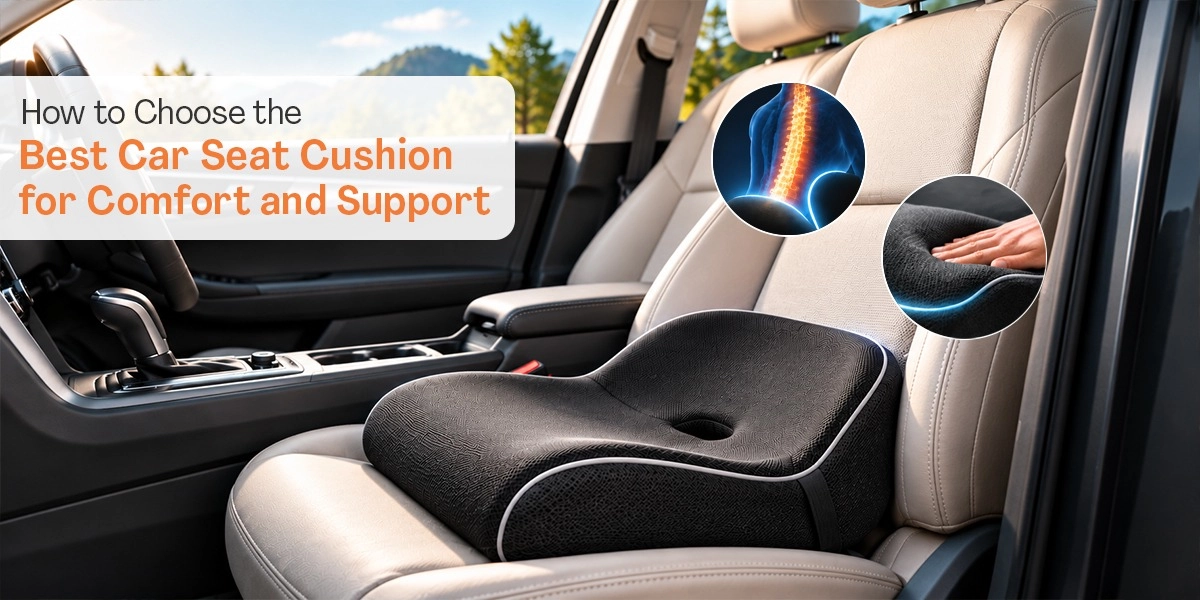
How to Choose the Best Car Seat Cushion for Comfort and Support
Your car seat might feel perfectly comfortable during the first ten minutes of a drive. But after an hour in traffic, you may find yourself shifting your hips, adjusting your posture, or stretching your back as soon as you park.
The problem isn’t always the seat itself; sometimes, its shape, firmness, or padding simply doesn’t suit your body. Choosing the best car seat cushion means looking beyond softness and finding a design that works with your existing seat, driving position, and daily routine.
What to Look for When Choosing a Car Seat Cushion
1. Identify Where Your Seat Falls Short
Before buying a cushion, pay attention to when discomfort begins and where you feel it. Pressure beneath your sitting bones may call for a cushion that distributes weight more evenly, while discomfort caused by poor lower-back positioning may require lumbar support instead of extra padding beneath your hips.
Your current seat also matters. If its foam has flattened over time, a cushion may provide temporary improvement but won’t repair the underlying damage. For drivers who spend hours commuting, identifying the actual problem first makes it easier to choose a car seat cushion for comfort that serves a clear purpose.
2. Choose a Material That Suits Your Driving Conditions
The filling influences how a cushion responds to your weight, while its cover affects airflow and everyday maintenance.
-
Memory Foam: A memory foam car seat cushion moulds to your body under pressure and can provide a more contoured seating surface. However, some versions retain heat, which may become noticeable during longer journeys.
-
Gel-filled Designs: A cooling gel car seat cushion may help manage surface warmth, depending on its construction. Look for breathable covers rather than relying on the word “cooling” alone.
-
Firm Foam: This may suit drivers who prefer a stable surface instead of sinking deeply into their seat.
-
Mesh or Ventilated Covers: These can encourage airflow, making them worth considering for regular driving in warm weather.
Don’t choose by material name alone. A well-constructed foam cushion with a breathable cover may suit you better than a poorly designed product with more elaborate features.
3. Check Thickness, Shape, and Stability
A cushion can feel comfortable in your hand but behave differently once placed on your car seat. Thickness is particularly important because adding height changes your position relative to the steering wheel, dashboard, and pedals.
If your seat already provides adequate height, a thick cushion may leave you feeling too elevated. A contoured design may provide a more suitable seating surface, provided its shape matches your body and doesn’t create pressure around your thighs.
Stability matters just as much. Look for a non-slip base or suitable attachment system that keeps the cushion in place. Also, check its dimensions against your seat before purchasing.
The best car seat cushion should fit securely without interfering with seat belts, side airbags, or other vehicle safety systems. Always follow your vehicle manufacturer’s guidance on seat accessories.
4. Match the Cushion to Your Driving Routine
The right choice depends on how you use your car, not simply how often you drive.
-
For Daily Commuting: Choose a cushion with a manageable thickness, a secure base, and a cover that’s easy to clean. Frequent stops and starts make stability particularly useful.
-
For Road Trips: A car seat cushion for long drives should maintain its shape during extended sitting. Pay attention to how it distributes pressure rather than judging it by its initial softness.
-
For Rideshare and Delivery Work: Durability and easy maintenance become priorities when you spend much of the day behind the wheel and repeatedly enter and exit the car.
-
For Compact Vehicles: A low-profile cushion may be easier to accommodate, especially when headroom and pedal reach are already limited.
For any car seat cushion for drivers, comfort should never come at the expense of a safe, controlled driving position.
5. Avoid These Common Buying Mistakes
One mistake is assuming that softer padding automatically means better support. A cushion that compresses too much may not feel comfortable after prolonged sitting.
Another is overlooking the original seat’s condition. If the seat slopes unevenly or its padding has collapsed, adding another layer may not correct the problem.
Finally, don’t ignore the cover, cleaning instructions, or return conditions. A cushion that is difficult to maintain or doesn’t fit your seat can quickly become an inconvenience rather than a useful upgrade.
6. Test the Fit Before Driving
Once the cushion is installed, sit in your normal driving position and check whether it stays flat and secure. Make sure the front edge doesn’t press uncomfortably against the backs of your thighs and that you can reach the pedals fully.
Check your visibility and steering-wheel reach as well. If the cushion changes your position significantly or interferes with any safety system, don’t use it while driving. Persistent or worsening pain also deserves professional medical advice rather than relying on a cushion alone.
Conclusion
A useful car seat cushion buying guide starts with your actual seating problem, then considers material, firmness, thickness, and fit. The best car seat cushion isn’t necessarily the thickest or most expensive option; it’s the one that suits your body, fits your vehicle, and remains comfortable without compromising safe driving.
At Home Essentials Online Store, we offer practical, thoughtfully selected essentials that make everyday living easier, more comfortable, and more convenient.
Popular Post




Subscribe to our journal
Fresh home ideas delivered to your inbox — and 10% off your first order.