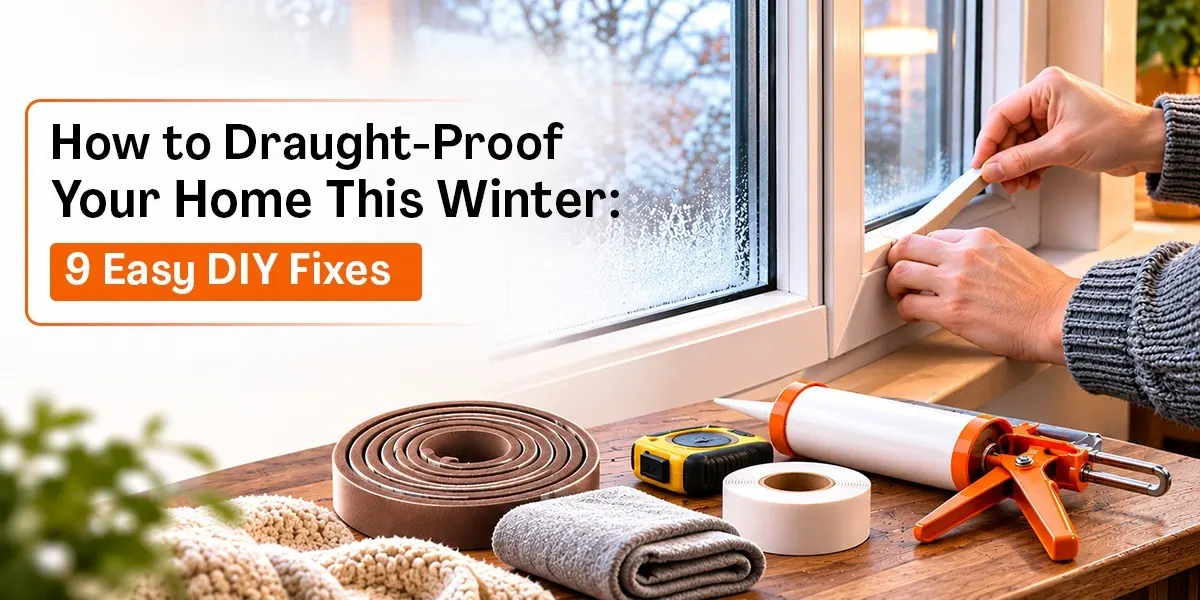





Person sealing a window frame to draught-proof a home for winte

How to Draught-Proof Your Home This Winter: 9 Easy DIY Fixes

A cold drought can make one corner of your home uncomfortable, even when the heating is on. You might notice it while sitting on the sofa, walking past the front door or getting out of bed on a chilly morning. Often, the cause is not a faulty heating system but small gaps around windows, doors, letterboxes and floorboards.

You do not always need expensive repairs to deal with these gaps. A few inexpensive materials and simple DIY fixes can help reduce unwanted cold air.

Here are nine practical ways to draught-proof your home this winter without stretching your budget.

9 Easy and Cheap Ways to Draught-Proof Your Home

1. Seal Gaps Around Windows with Draught-Excluder Tape

Loose window seals and small gaps around frames can allow cold air inside. Self-adhesive foam or rubber strips are affordable options for closing these openings.

A window draught seal can be useful for suitable window frames, including some casement windows. However, sash windows may need brush seals designed for their sliding movement.

Before purchasing:

  • Measure the gap around the frame.
  • Check the type of window you have.
  • Choose a strip that matches the gap thickness.
  • Clean and dry the surface before applying it.

A properly fitted seal should reduce unwanted airflow without making the window difficult to open or close.

2. Use a Draught Excluder Under External Doors

Cold air can enter through the gap beneath your front or back door. A draught excluder for door gaps can help block this airflow.

You can choose a fitted door-bottom seal or a removable fabric door snake. A door draught stopper is particularly useful if you want a solution that does not require drilling or permanent changes.

For rented properties, removable options are often more convenient. Check that the seal does not obstruct the door or affect its safe operation.

3. Install a Letterbox Draught Excluder

Your letterbox can be another source of unwanted airflow, especially if it has no internal flap or brush.

An internal letterbox brush or spring-loaded cover helps reduce the amount of cold air entering through the opening. Choose a suitable size and make sure the post can still pass through easily.

You can also check for gaps around the letterbox frame and use an appropriate seal where needed.

4. Add Weatherstripping Around External Door Frames

Sometimes, cold air does not enter beneath a door but through the gaps between its frame and edges. Worn or damaged seals can make this problem worse.

Apply adhesive foam or rubber weatherstripping around the frame where the door closes. Measure the gap first and choose a suitable thickness.

Avoid permanently sealing internal door gaps without checking your home’s ventilation requirements. Some internal gaps allow air to move between rooms, particularly where heating and ventilation systems depend on this airflow.

5. Cover Unused Chimneys with a Chimney Draught Excluder

An unused fireplace can be a hidden source of cold air. If you notice a drought near your fireplace, check whether it is coming through the chimney.

A removable chimney draught excluder can help reduce unwanted airflow. However, it should not completely block the chimney, as some ventilation is needed to prevent moisture build-up. Always remove the excluder before lighting a fire.

If your fireplace is still in use, do not install a permanent seal. Get advice from a qualified professional if you are unsure about the right solution.

6. Seal Small Gaps Around Pipes and Skirting Boards

Small openings around plumbing pipes and skirting boards can allow cold air into your rooms. These gaps are easy to overlook, particularly behind kitchen cabinets and bathroom fixtures.

For narrow gaps, use a suitable flexible sealant. Larger openings may require an appropriate filler or professional attention. Choose materials that can handle slight movement, especially around floorboards and skirting.

This is one of the practical cheap ways to keep a house warm, particularly in older properties. However, never seal gaps that provide necessary ventilation beneath suspended timber floors, such as external airbricks.

7. Use Thick Curtains Around Windows

Even properly sealed windows can feel cold during winter. Thick or thermal curtains provide an additional layer between the glass and your living space.

Close them after sunset to help retain warmth. During sunny days, open them to let natural sunlight enter the room.

Choose curtains that fit your windows properly, but make sure they do not cover radiators. This allows warm air to circulate throughout the room.

8. Draught-Proof Your Loft Hatch

Warm air can escape through gaps around a poorly sealed loft hatch. If your loft access is not fitted properly, cold air may also enter the rooms below.

Check the edges of the hatch for visible gaps. Apply suitable foam sealing strips around the frame to create a closer fit. You can also add insulation to the hatch itself if required.

Make sure the hatch closes securely and remains easy to access when needed.

9. Use Rugs to Cover Gaps in Floorboards

Wooden floors can develop small gaps between floorboards over time. These openings may allow cold air to move into your rooms.

Placing thick rugs or runners over exposed floor areas provides an extra layer of comfort. For permanent draught proofing, use a flexible floorboard filler or suitable sealant that can accommodate natural movement in the wood.

Rugs are particularly useful in bedrooms and living rooms where cold flooring can make the space uncomfortable.

What Should You Never Block When Draught-Proofing?

While draught proofing helps reduce unwanted airflow, sealing every opening in your home is not safe. Some openings provide essential ventilation and must remain clear.

Keep These Points In Mind:

  • Trickle Vents and Airbricks: Never block these openings. They provide fresh air and help maintain ventilation.
  • Extractor Fans: Keep kitchen and bathroom fans clear to remove moisture and indoor pollutants.
  • Fuel-Burning Appliances: Never block ventilation required by boilers, gas fires or other fuel-burning appliances. Seek professional advice if you are unsure.
  • Working Chimneys: Do not fit chimney excluders while a fireplace or appliance is in use.

Make Your Home More Comfortable with Home Essentials Online

Keeping cold draughts out does not always require costly improvements. Small additions, such as window sealing strips and door draught stoppers, can make everyday spaces more comfortable during winter.

Home Essentials Online Store offers practical products to help with simple household needs and maintenance.

Shop the Winter Window & Door Seal Strip and take a simple step towards a warmer, more comfortable home.

Frequently Asked Questions

Popular Post